Otto Long · 8 September 2026
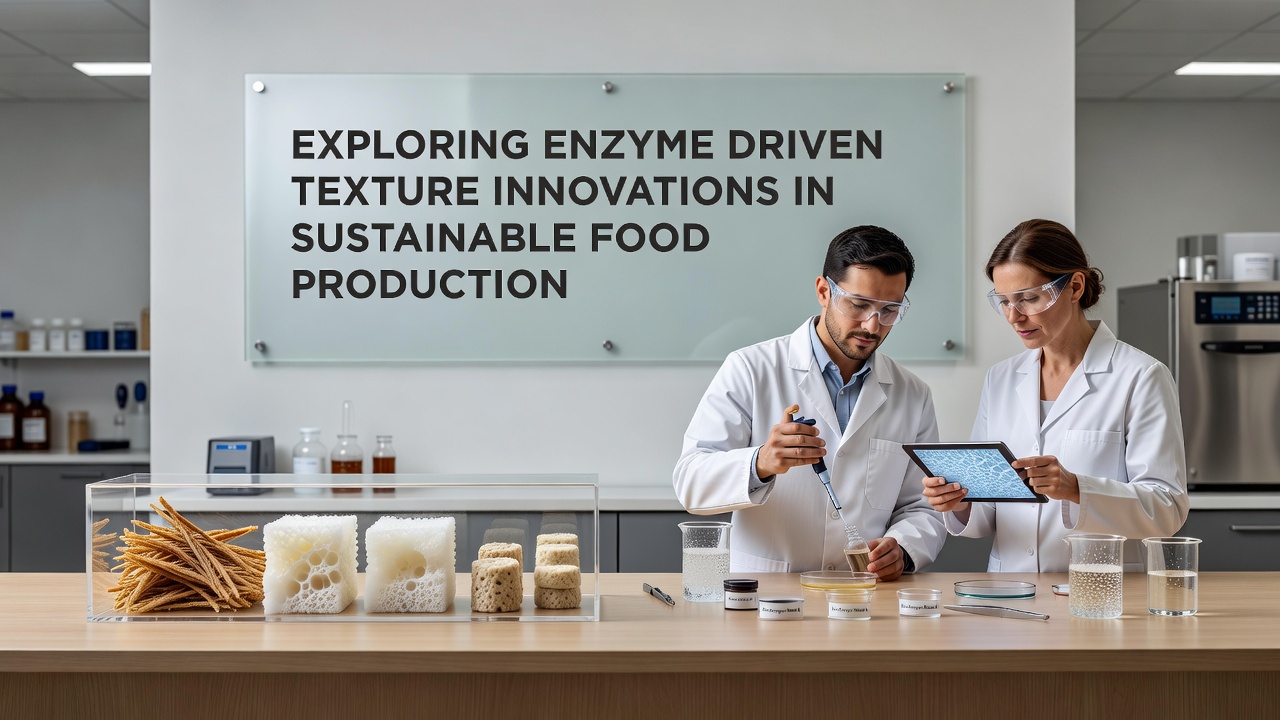
Exploring Enzyme Driven Texture Innovations in Sustainable Food Production
Enzymes function as biological catalysts that modify molecular structures in food ingredients, and researchers have documented their growing role in creating desirable textures for sustainable products such as plant-based meats, dairy alternatives, and protein-enriched grains. These proteins accelerate specific reactions without becoming part of the final product, which allows manufacturers to reduce reliance on synthetic additives while maintaining product quality across large-scale operations.
Mechanisms Behind Texture Modification
Transglutaminase cross-links proteins to form stable networks that improve elasticity and water retention in formulations made from pea, soy, or mycoprotein sources, whereas proteases break down larger protein chains to soften textures or generate savory notes in fermented plant matrices. Studies from multiple institutions show that controlled enzyme dosages can replicate the fibrous bite of animal muscle tissue in extruded products, and data from pilot facilities indicate yield improvements of 15 to 20 percent when enzymes replace mechanical shearing steps. Observers note that temperature and pH adjustments during processing determine enzyme activity windows, enabling precise timing so reactions halt before over-softening occurs.
Integration with Sustainable Supply Chains
Enzyme technologies align with circular economy goals because they operate under mild conditions that lower energy inputs compared with high-pressure homogenization or chemical hydrolysis methods. Facilities in regions with abundant agricultural byproducts have incorporated enzymes to upcycle spent grains and fruit pomace into textured ingredients, reducing waste volumes that would otherwise require disposal. Figures released by industry monitoring groups reveal that enzyme-assisted processes cut water usage in certain dairy-alternative lines by approximately 30 percent, since fewer rinsing cycles are needed to achieve target viscosities. Supply chain analysts track these efficiencies through life-cycle assessments that compare enzyme routes against conventional extrusion, highlighting lower greenhouse-gas outputs per kilogram of finished product.
Commercial Applications and Case Examples
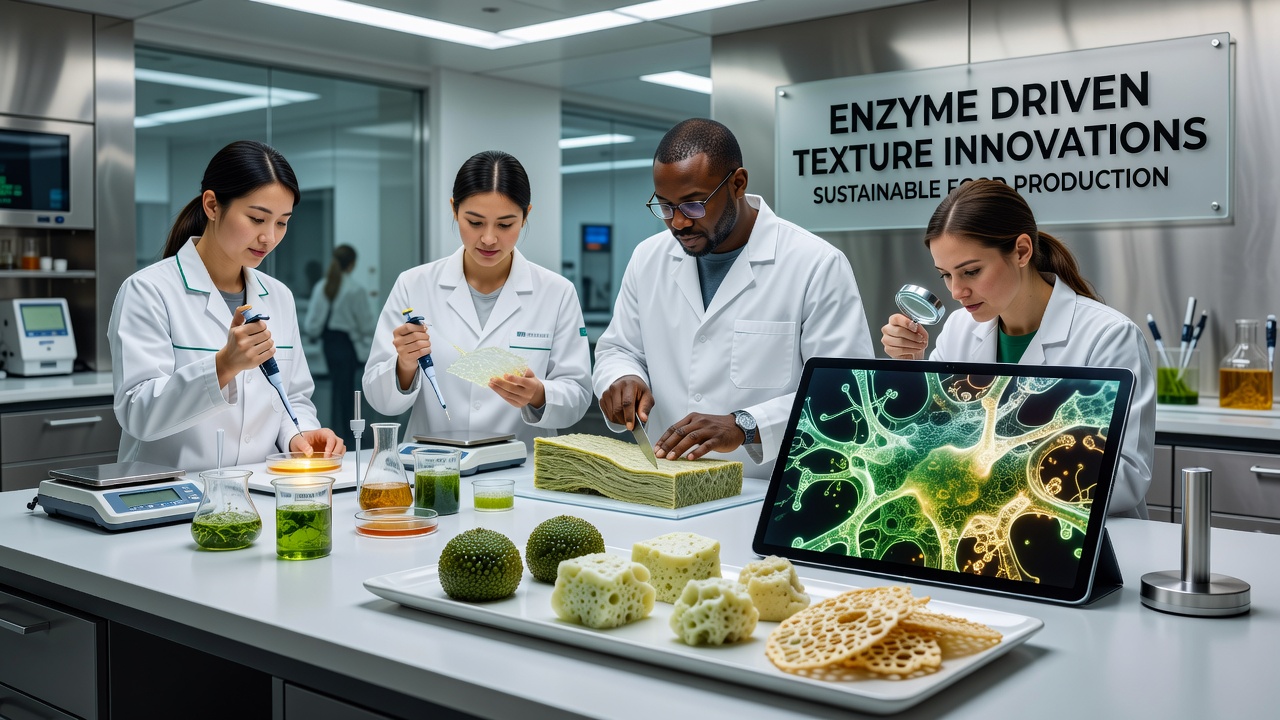
One production site in the Netherlands scaled transglutaminase treatment for oat-based yogurts, achieving spoonable consistencies without added starches, while a Canadian processor applied lipase variants to canola protein concentrates to create emulsified textures suitable for baked goods. Australian research teams at CSIRO documented how fungal proteases improved rehydration rates in textured vegetable proteins destined for ready-meal formats, allowing shorter cooking times and better nutrient retention. These implementations demonstrate that enzyme selection depends on substrate composition, with multi-enzyme blends often required to balance chewiness, juiciness, and sliceability in final formats.
Regulatory Landscape and September 2026 Developments
Regulatory bodies evaluate enzyme safety through exposure assessments and purity specifications before granting approvals for food use. In the European Union, EFSA evaluations guide permitted enzyme sources and residual activity limits, while Canadian authorities maintain a positive list updated through Health Canada consultations. September 2026 marks the scheduled release of harmonized guidelines from an international working group on enzyme labeling for novel processing aids, expected to clarify declaration requirements across export markets. Industry participants anticipate that these updates will streamline documentation for multi-region launches without altering existing safety thresholds.
Technical Challenges in Scaling
Batch-to-batch variability in raw materials can shift optimal enzyme concentrations, requiring real-time monitoring systems that adjust dosing during continuous processing lines. Thermal inactivation steps must be calibrated to avoid residual activity that might affect shelf-life textures, and formulation teams routinely test combinations under accelerated storage conditions to verify stability. Equipment designers have introduced modular reactors that maintain narrow temperature bands, supporting consistent performance when switching between different plant protein streams.
Future Research Directions
Genomic sequencing of extremophile microorganisms continues to yield enzyme variants active at higher temperatures or broader pH ranges, which could expand applications to heat-treated or acidic sustainable food formats. Collaborative projects between academic labs and ingredient suppliers focus on immobilizing enzymes on reusable carriers to lower costs and minimize protein carryover in finished goods. Data from ongoing trials indicate potential for combining enzymes with precision fermentation outputs to generate hybrid textures that match both nutritional and sensory benchmarks.
Conclusion
Enzyme-driven approaches have expanded the range of textures achievable in sustainable food categories by leveraging targeted biochemical reactions that complement existing manufacturing infrastructure. Continued refinement of enzyme portfolios, supported by updated regulatory frameworks slated for September 2026, positions these tools to address both functional and environmental performance metrics across global production networks.